
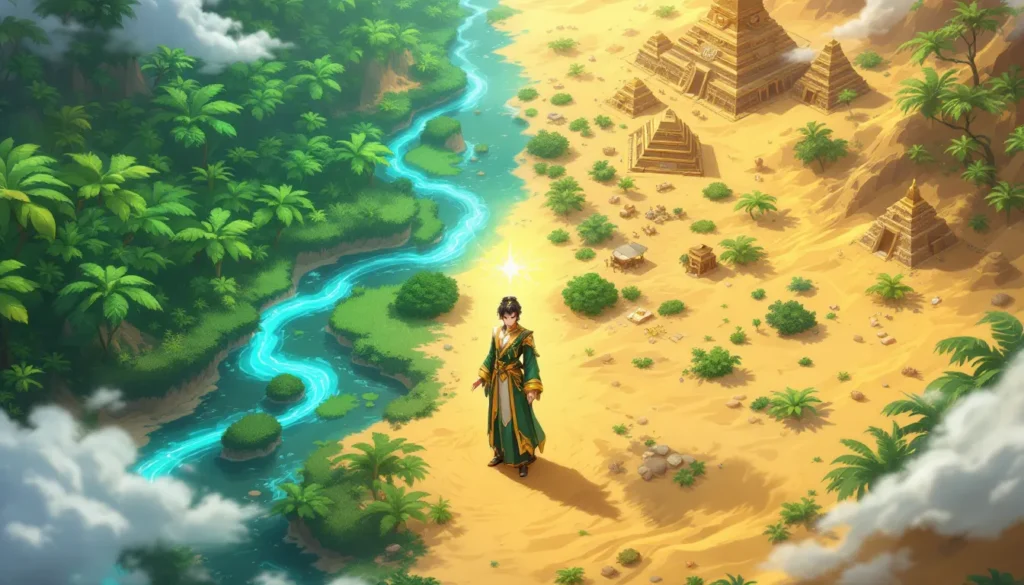
Sumeru dropped in Genshin Impact Version 3.0 and completely changed how players think about regional exploration. This massive desert kingdom dominates the eastern side of Teyvat and brings a distinct vibe, sprawling sand dunes, lush rainforests, intricate puzzles, and some seriously deep lore tied to the Dendro element. Whether you’re hunting for world exploration clues, trying to max out a new 5-star character, or just trying to understand why the Archon Quest feels so heavy on story, Sumeru’s got layers. This guide breaks down everything you need to navigate the region like a veteran, from quick resource farming spots to character builds that’ll actually matter in combat.
Table of Contents
ToggleKey Takeaways
- Sumeru in Genshin Impact features two distinct biomes—a puzzle-heavy rainforest and an arid desert—both centered around Dendro element mechanics and requiring 25-30 hours for complete exploration.
- Nahida, the Dendro Archon, is the most impactful Sumeru character for building meta-relevant Dendro teams, while free characters like Collei and Dendro Traveler provide excellent budget-friendly alternatives.
- Sumeru’s puzzle-based exploration rewards curiosity and narrative engagement over speed, with hidden world quests and environmental Dendro reactions serving as primary challenge mechanics rather than pure combat DPS checks.
- Optimal team compositions for Sumeru emphasize elemental redundancy and reaction chains—particularly Dendro hyperbloom and vaporize setups—with at least two sources of off-field application per element type.
- Daily farming routes (15 minutes) and scarab hunts provide essential ascension materials; farming strategies focus on sustainable collection across multiple sessions rather than exhaustive single-day grinds.
- Sumeru’s Archon Quest and world quests deliver deep lore and narrative depth that justify taking time to engage with NPCs and side content before rushing through main story progression.
What Is Sumeru in Genshin Impact
Overview of the Region
Sumeru is Teyvat’s third-largest explorable region and home to the Dendro Archon. It’s split into two major biomes with completely different feels: a lush, puzzle-heavy rainforest in the north and west, and an arid, dangerous desert to the south and east. The entire region is built around the Dendro element, which means you’ll see a ton of Dendro slimes, hilichurls, and other creatures. The Dendro resonance is strong here, so bring Dendro characters if possible for that sweet elemental bonus.
The region launched with Version 3.0 in August 2022 and has received multiple expansions since, with new domains, bosses, and story areas rolling out gradually. Currently, you’re looking at roughly 25-30 hours of focused exploration to 100% the map, depending on puzzle complexity and how thoroughly you hunt chests.
Key Geography and Districts
Sumeru breaks down into several distinct zones, each with its own flavor and challenge level. The Rainforest covers the northwestern portion and features dense vegetation, abundant water sources, and puzzle-heavy exploration. You’ll spend a lot of time here solving environmental mysteries tied to plants and elemental mechanics.
The Desert Zone is the opposite, harsh, arid, and populated with ancient structures and traps. It’s also home to multiple world bosses and some of the region’s toughest enemies. Between these two biomes sits a transition zone with a mix of both environments.
Key districts include Port Ormos (a trading hub on the coast), Caravan Ribat (a desert rest stop with NPCs), and several smaller settlements scattered throughout. Each district serves as a checkpoint for fast travel and contains vendor NPCs who trade crucial materials.
Exploring Sumeru’s Districts and Landmarks
Rainforest Zone
The rainforest is a visual masterpiece and a puzzle solver’s paradise. Dense vegetation means good sightlines are rare, but the dense foliage hides tons of chests and world quests. The water mechanics here are crucial, you’ll use Dendro reactions (like Dendro + Hydro for bloom) to activate mechanisms and unlock secret areas.
Key areas include Apam Woods, packed with Dendro puzzles and easy mob drops: Avidya Forest, a massive jungle expanse with hidden treasure: and Rainforest Watch, a central hub with puzzle mechanics tied to three massive trees. Don’t sleep on the smaller unnamed areas either, some of the best chest spawns hide in non-obvious corners.
Expectation: You’ll need characters with Dendro application (like Nahida or Dendro Traveler) to solve about 30-40% of the puzzles here. Bring a Hydro applicator too for reaction-based solutions. Stamina management matters because climbing and gliding are constant.
Desert Zone
The desert is where Sumeru shows its teeth. Extreme temperatures, limited water, and aggressive enemy placements make it noticeably harder than the rainforest. Scarab beetles spawn here too, they drop crucial materials for multiple 5-star characters, so you’ll be farming this zone repeatedly.
Major locations include Dune of Magnet, home to multiple Scarab spawns and Dendro slime clusters: Valley of Dahri, featuring temple ruins and harder combat encounters: and Tunnels of the Sand, a dungeon-like structure with traps and environmental hazards. The Golden Wolflord boss arena sits at the southern edge, you’ll need this fight for multiple characters’ ascension materials.
Bring Cryo and Electro characters here. The desert enemies have high Dendro resistance, and elemental variety in your team matters more than in the rainforest. Stamina regeneration becomes critical since climbing sand dunes drains stamina fast.
Notable Landmarks and Dungeons
The Mausoleum of King Deshret is the region’s most impressive landmark, a massive pyramid structure that dominates the southern landscape. It’s less a dungeon and more a multi-layered exploration puzzle, with chambers revealing story content and high-rarity chest spawns.
Sebou’s Remains serves as the regional domain, accessible through a specific quest. It’s where you farm ascension materials for Dendro characters. Bring Pyro to burn through the Dendro shields scattered throughout.
Multiple smaller dungeons exist too, Ley Line Outcrops (for talent books), tree trials (for weapon enhancement materials), and spiral abyss-style chambers with specific enemy lineups. Unlike other regions, Sumeru’s dungeons lean hard into environmental puzzles rather than pure combat DPS checks. This means your team composition matters, but raw damage numbers aren’t everything.
Genshin Impact Nahida: Unleash Her Powers for Ultimate Team Synergy is essential reading if you’re running a Dendro-heavy team through these zones.
Sumeru Characters and Story
Major Characters Introduced
Sumeru brought several iconic characters into the fold, and they’re not just flavor, many are meta-relevant for years. Nahida, the Dendro Archon, became the single most important support for any Dendro team composition. Her off-field Dendro application is unmatched, and her elemental mastery buff stacks with almost every reaction-heavy build.
Dehya (a 5-star Pyro claymore user) offers personal DPS with a survivability angle, her shields and healing make her viable in tough content. She’s not “broken” like some older 5-stars, but she fills a specific niche for players wanting a Pyro DPS with utility.
The region also introduced Collei (free Dendro bow user, farmable like Barbara) and Baizhu (5-star Dendro healer with poison application). Collei is legitimately one of the best free-to-play Dendro applicators, making her essential for budget builds. Baizhu fits the off-field Dendro support role when Nahida isn’t available.
Tier-wise: Nahida sits at the absolute top for Dendro teams. Dehya is solid but situational. Collei punches way above her rarity for f2p players. Baizhu’s value fluctuates with meta shifts, but he’s consistently usable.
Archon Quest and Story Progression
Sumeru’s Archon Quest, “Act I: The Flame Mnemonic” through “Act V: Akasha’s Lament”, is genuinely one of Genshin’s best story sequences. It digs deep into Teyvat’s lore, the nature of the Archons themselves, and the game’s larger philosophical questions about knowledge and freedom. You’ll need Adventure Rank 35+ and completion of the Liyue Archon Quest to access it.
The quest unfolds across multiple chapters released over several patches. Early chapters focus on investigating the desert and uncovering why Sumeru’s Academia (the region’s governing institution) is suppressing certain information. Later chapters escalate into territory that recontextualizes earlier Archon Quests.
World quests here are top-tier, they actually matter to the overarching narrative rather than feeling like side content. Characters like Nahida, Alhaitham, and Kaveh drive the story forward with personality and depth. If you’re invested in Genshin’s lore, Sumeru’s story hits different than previous regions.
Pacing note: Don’t rush it. The voice acting and writing justify taking your time through these quests, especially if you’re playing in English or Japanese dub.
Quests and World Exploration
Main Quests and Side Quests
Sumeru contains roughly 8 major story quests (separate from the Archon Quest) and 25+ side quests tied to NPCs and world-building. Main quests unlock progressively as you explore and reach specific quest markers. These aren’t optional, they’re your primary source of exploration experience and Primogems, so don’t skip them.
Notable main quests include investigations tied to the Scarlet King (lore-heavy), explorations of Apam Woods (puzzle tutorials), and battles in the desert temples (combat-focused). Each scales in difficulty and required exploration to complete.
Side quests vary wildly in content. Some are simple “find the item” tasks that take 5 minutes. Others are multi-part sequences revealing NPC backstories and triggering world events. “Fruit of Flowers” is a standout, it’s a touching story quest involving farming and character development that most players praise. “By the Oasis of Dahri” ties into desert lore and has a solid payoff.
Completion tip: Use your map markers. Sumeru’s quests don’t always have obvious markers, so you’ll miss some without actively looking. If a quest journal entry feels incomplete, backtrack to the NPC or area mentioned.
World Quests and Hidden Treasures
World quests are Sumeru’s secret sauce, they’re everywhere, but many stay hidden until you stumble upon the right NPC or environmental trigger. Unlike main quests, these don’t show map markers initially, which is intentional design. The region rewards curiosity.
Dendro puzzles are the most common world quest type. You’ll encounter Dendro barriers blocking chests or areas, environmental Dendro reactions (bloom, hyperbloom, spread), and logic puzzles requiring specific elemental sequences. These are not DPS checks, they’re puzzle checks. You can solve most with basic teams if you understand the mechanics.
Scarab hunts are world exploration mechanics disguised as quests. Scarabs hide underground and emerge when you get close. Collecting three specific scarabs in a zone often unlocks a chest or world boss marker. They’re mini-hunts that break up standard exploration.
Hidden treasures spawn throughout Sumeru, some in obvious spots, others requiring you to solve multi-part environmental puzzles. Precious chests (the rarest type) often sit at the end of these puzzles, containing 40 Primogems and high-rarity artifact drops. Don’t overlook them.
Farming strategy: Set aside focused exploration sessions. Dedicate 30 minutes to one zone, clear all visible chests, complete any world quests that trigger, then move to the next zone. You’ll maximize rewards and unlock fast-travel points in the process.
Resources and Enemies in Sumeru
Common Enemy Types and Bosses
Sumeru’s enemy roster is heavy on Dendro creatures, obviously. Dendro Slimes, Dendro Hilichurls, and Dendro Mitachurls dominate the overworld. These have high Dendro resistance, so bringing Dendro DPS into slime-heavy areas isn’t efficient, bring Pyro or Cryo instead.
Scarabs are the region’s signature enemy type. They’re not aggressive, but they apply Dendro and have Dendro shields. They drop Scarab Beast Drops (a key ascension material for multiple 5-stars). The three species, Dune Scarab, Coral Scarab, and Dunedrake Scarab, appear in specific zones and drop slightly different materials.
World bosses include:
- Golden Wolflord (Geo construct, drops Eon Sigils needed for Traveler and Alhaitham ascension): Weak to Pyro and Electro. Solo-able with decent gear, but watch its charge attack, it hits hard.
- The Perpetual Mechanical Array (Electro construct, drops materials for multiple Electro supports): Positioned in the desert north of Port Ormos. High single-target damage output, so bring shields or heals.
- Maguu Kenki (Cryo, spawns in Rainforest): Fast-paced fight requiring quick rotations. Bring Pyro and Electro for reaction damage.
Weekly bosses (Trounce domains) include the Dendro Hypostasis and various other endgame encounters. These are specifically designed for multiplayer, though you can solo them with proper gear and rotation management.
Meta relevance: Game8 maintains updated tier lists for handling Sumeru’s bosses with f2p-friendly teams if you need reference builds.
Local Specialties and Farming Locations
Sumeru’s local specialties are crucial for character ascension. Kalpalata Lotus grows exclusively in the rainforest near water sources. It’s used for Nahida, Baizhu, and Dendro Traveler ascensions. Spawn rate: roughly 30-40 per cycle across the entire rainforest.
Dendrobium blooms near Dendro trees and structures in both biomes. It ascends Collei and other Dendro characters. Much rarer than Kalpalata Lotus, only 10-15 per cycle.
Scarab Beast Drops (mentioned above) are essential but unique. You can farm them infinitely, unlike other specialties which reset daily. There’s no “optimal route”, just hunt scarabs whenever you need them.
Sumeru Roses (pink flowers scattered throughout) are cooking ingredients and minor ascension materials. Common enough that you’ll collect them passively while exploring.
Beryllium Ore appears as underground deposits across the desert. Mine it for weapon enhancement materials. Bring a Claymore user to speed up mining.
Daily respawn timer: All flowers reset on the server reset (daily at 4 AM EDT). Optimized farming route exists on GameRant if you want a 15-minute route hitting every spawn.
Budget tip: Don’t over-farm on day one. Spread your collection across a few days rather than burning out on a single route. The materials aren’t going anywhere.
Essential Tips for Mastering Sumeru
Optimal Team Compositions
Sumeru challenges differ fundamentally from earlier regions, so cookie-cutter teams don’t always work. The rainforest heavily favors Dendro and Hydro combinations for bloom and spread reactions. Standard comps include:
Dendro hyperbloom team:
- Nahida (Dendro application)
- Fischl (Electro sub-DPS, off-field application)
- Xingqiu or Yelan (Hydro application)
- Kazuha or Sucrose (Elemental DMG boost)
This setup triggers bloom constantly while scaling Dendro damage through elemental mastery. Fischl’s off-field Electro converts blooms into hyperblooms, which scale with EM. Works against most rainforest enemies.
Dendro vaporize team:
- Alhaitham or another Dendro DPS
- Xingqiu (Hydro application)
- Bennett (ATK buff, Pyro)
- Kazuha (Elemental bonus)
For the desert, bring Pyro and Cryo to handle Dendro shields. Genshin Impact Xingqiu: Master covers this support character in depth, he’s irreplaceable for most Dendro reactions.
F2P-friendly comp:
- Dendro Traveler (free Dendro applicator)
- Collei (free Dendro support)
- Barbara (free Hydro healer)
- Anemo Traveler (free EM buff and grouping)
This actually works for casual exploration. Not optimal for harder domains, but viable for overworld.
Team-building principle: Redundancy beats perfection. If your single Dendro applicator dies, your entire reaction chain collapses. Bring at least two sources of off-field application per element type.
Best Farming Routes and Strategies
Daily material route (15 minutes):
- Teleport to Caravan Ribat waypoint
- Farm all Dendrobium in the southern desert (6-8 spawns)
- Teleport to Rainforest Watch waypoint
- Farm Kalpalata Lotus cluster near the water (8-10 spawns)
- Teleport to Port Ormos waypoint
- Grab remaining Lotus spawns in the merchant district
Yield: ~15 Kalpalata Lotus, ~8 Dendrobium, ~12 Sumeru Roses (bonus). Takes a single rotation if you use Sayu or another mobile character.
Scarab hunting (30 minutes, variable yield):
Scarabs don’t respawn daily, they spawn when you approach their buried location. Each zone has roughly 3-5 scarabs. They drop Scarab Beast Parts (used for ascending Nahida, Alhaitham, etc.). Hunt them whenever you need parts: there’s no efficiency cap.
Meta scarabs spawn near Dune of Magnet, Sand-Veil Precipice, and scattered throughout the southern desert. Use IGN’s interactive map to mark scarab locations, it saves time versus random searching.
Domain farming optimization:
Sumeru has two Artifact domains, one in the rainforest (drops Dendro-friendly sets like Gilded Dreams), one in the desert (drops Noblesse and Shimenawa). Both follow standard domain resin costs (20 resin per run, 60 resin daily limit). Artifact farming here is identical to other regions, consistent but grindy.
Focus on the rainforest domain first if you’re building Dendro teams. Gilded Dreams scales with EM, making it perfect for bloom/hyperbloom carries.
Talent book farming:
Sumeru’s talent books support Dendro and Anemo characters exclusively. The domain respawns on specific weekdays (check your daily domain schedule). Farm during the correct day for your character, don’t waste resin on wrong-day rotations.
Efficiency meta: Use fragile resin on domains you’ll farm repeatedly. Save it for artifact domains, not talent book domains, since talent books are one-time-per-day-per-character anyway.
Completion note: Sumeru’s exploration feels like an actual adventure rather than a checklist. Take your time, engage with the story, and don’t stress about “optimal” routes. The region rewards curiosity, and enjoying the narrative is worth more than shaving 5 minutes off your farming time.
Conclusion
Sumeru represents a meaningful evolution in Genshin Impact’s design philosophy. It’s more lore-dense, puzzle-heavy, and character-focused than any previous region. Whether you’re chasing Primogems through world exploration, hunting scarab materials for your newest 5-star, or genuinely invested in the Dendro Archon’s story, Sumeru delivers on multiple fronts.
The region demands patience and observation, rushing through it misses the intentional design details and hidden world quests that make it special. Your team composition matters more here than in earlier regions because specific elemental weaknesses are deliberate challenges, not mere suggestions. And the characters introduced here, particularly Nahida, reshape the meta in ways that resonate even now.
Approach Sumeru like an actual adventure: explore slowly, talk to NPCs, engage with side quests before mainlining the Archon Quest, and don’t obsess over completing your farm routes in record time. The region is built to reward players who actually care about Teyvat’s world, and that makes it stand apart.


